
Mangal Dosh (Manglik Dosha): Complete Guide with Remedies
Everything you need to know about Mangal Dosh in Vedic astrology — what it is, how to check if you have it, its real effects on marriage, and time-tested remedies to mitigate its influence.
Quick Answer: Mangal Dosh (Manglik Dosha) occurs in a Vedic birth chart when Mars is placed in the 1st, 2nd, 4th, 7th, 8th, or 12th house. It is believed to introduce friction, conflict, or delays in marriage and partnerships. Approximately 40% of individuals carry some form of this combination, and its severity depends on the ascendant, Mars's sign dignity, and whether benefic planets mitigate its influence through aspect or conjunction.
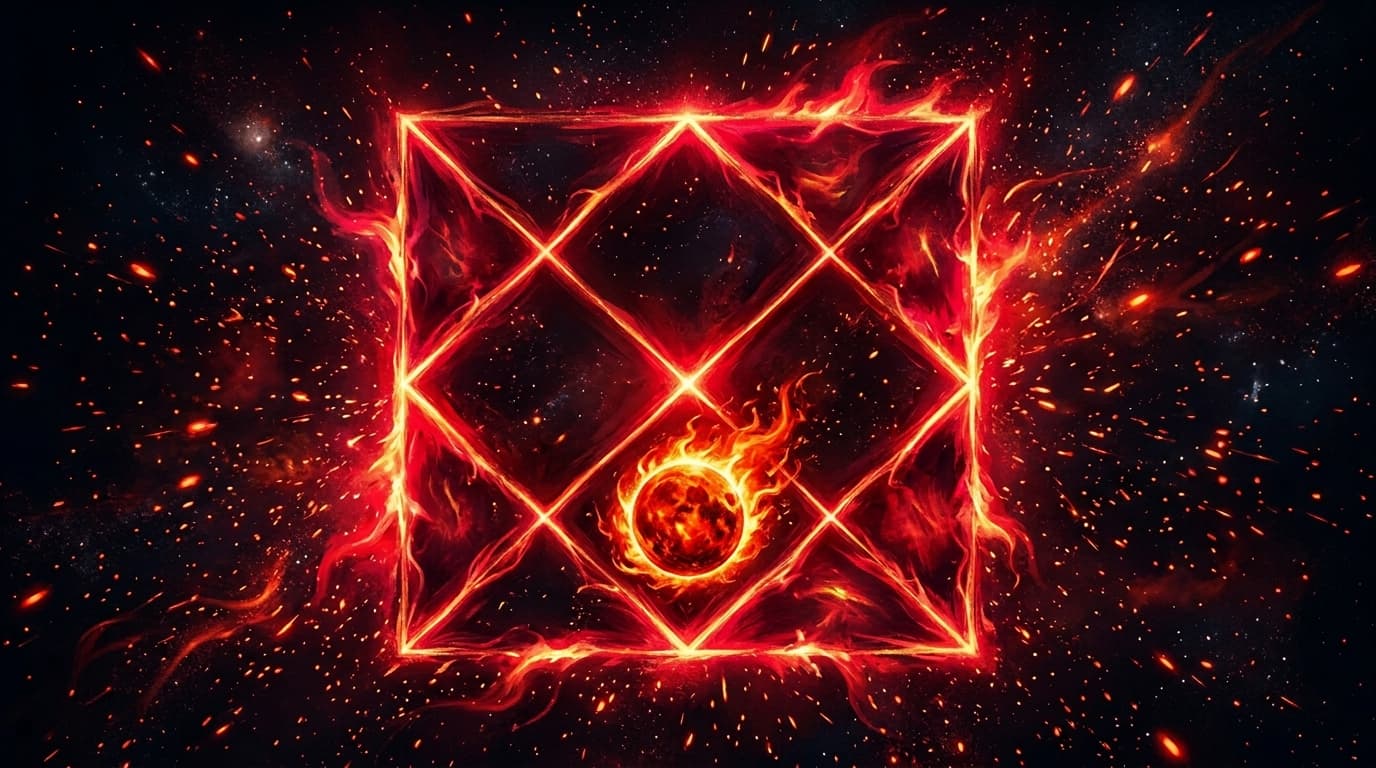
If you have ever had your birth chart (Kundli) analysed, there is a good chance someone mentioned the term “Mangal Dosh” or “Manglik.” Few concepts in Vedic astrology generate as much anxiety — or as many misconceptions — as Mangal Dosh. Families worry about delayed marriages, couples question their compatibility, and an entire industry of fear-based remedies has grown around it.
The truth is far more nuanced. Approximately 40% of all people have some form of Mangal Dosh in their charts, and the vast majority of them lead perfectly normal married lives. This guide will walk you through the actual astrological principles behind Mangal Dosh, help you understand when it truly matters, and provide classical remedies for cases where its effects are significant.
What is Mangal Dosh?
Mangal Dosh — also called Manglik Dosha, Kuja Dosha, or Angaraka Dosha — is a condition in Vedic astrology that occurs when Mars (Mangal) is placed in certain houses of the natal chart. Mars is a fiery, assertive planet associated with energy, courage, aggression, and passion. When it occupies specific positions in the horoscope, its intense energy is believed to create challenges in marital life and partnerships.
According to classical texts, Mangal Dosh is formed when Mars occupies the 1st, 4th, 7th, 8th, or 12th house from the Ascendant (Lagna). The logic behind each placement is straightforward:
- 1st House (Ascendant): Mars here makes the native aggressive and domineering in personality. This can lead to clashes with a spouse who may feel overpowered.
- 4th House (Sukha Bhava): The house of domestic happiness and emotional security. Mars here can create restlessness at home, frequent arguments, and dissatisfaction in family life.
- 7th House (Kalatra Bhava): The house of marriage and partnerships directly. Mars here is considered the most potent form of Mangal Dosh, bringing irritability and conflicts into the marriage itself.
- 8th House (Randhra Bhava): The house of longevity, transformation, and hidden matters. Mars here can indicate sudden disruptions, financial disputes with the spouse, and intensity in the relationship.
- 12th House (Vyaya Bhava): The house of losses and expenses. Mars here may lead to excessive spending, lack of intimacy, or separation-related issues.
How to Check if You Have Mangal Dosh
To determine whether Mangal Dosh exists in your chart, you need an accurately calculated Vedic birth chart. The birth chart must use the sidereal zodiac (not the tropical system used in Western astrology), and your exact birth time is critical since the Ascendant changes roughly every two hours.
Which chart to check
The primary check is done from the Lagna (Ascendant) in the D1 (Rashi) chart. However, many astrologers also check from the Moon sign and Venus for a more complete picture. If Mars is in the relevant houses from all three reference points, the Dosh is considered strong. If it appears from only one reference point, its intensity is milder.
The 2nd house variation
Some schools of thought, particularly in South Indian astrology, also include the 2nd house (Dhana Bhava — the house of family and speech) in the list of Mangal Dosh placements. The reasoning is that Mars in the 2nd house can cause harsh speech, which leads to family disputes and marital friction. This is a valid traditional view, though the classical Parashari texts primarily reference the five houses listed above.
Degrees matter
Not all Mars placements are equal. An astrologer will consider the degree of Mars, whether it is in its own sign or exalted, whether benefic planets aspect it, and its relationship with the house lord. A Mars at 2 degrees in the 7th house behaves very differently from one at 28 degrees. Context is everything in Vedic astrology.
Effects on Marriage
The primary concern with Mangal Dosh has always been its impact on marriage. Classical texts describe several potential effects, though it is important to remember that these are tendencies, not certainties:
- Delays in finding a suitable partner: Families aware of the Dosh may restrict the search to other Manglik individuals, narrowing the pool of potential matches.
- Temperamental conflicts: Mars brings assertiveness and a short temper. When channelled constructively, this energy fuels ambition and protectiveness. When unchecked, it can manifest as impatience, arguments, and dominance in the relationship.
- Physical or emotional distance: Particularly with Mars in the 12th house, there may be periods of separation — through travel, work commitments, or emotional withdrawal.
- Financial disagreements: Mars in the 8th house can bring disputes over joint finances, inheritance, or shared resources.
Manglik-to-Manglik matching
A widely followed principle is that a Manglik person should ideally marry another Manglik. The logic is that when both partners carry the same intensity of Mars energy, it balances out rather than creating a one-sided dynamic. While this is a valid traditional guideline, modern astrologers emphasise that the entire chart must be assessed. A comprehensive marriage compatibility analysis considers Ashtakoot (eight-fold) matching, Kuta scores, and the overall strength of the 7th house — not just Mangal Dosh in isolation.
Common Misconceptions About Mangal Dosh
Misinformation about Mangal Dosh has caused unnecessary fear for generations. Let us address the most common myths directly.
“Mangal Dosh means you cannot get married”
This is categorically false. Mangal Dosh may indicate challenges in marital life that require awareness and effort, but it does not prevent marriage. Millions of Manglik individuals are happily married. The Dosh is a factor to be aware of, not a life sentence.
“Mangal Dosh causes death of the spouse”
This is the most harmful misconception and has no basis in responsible astrological practice. Early texts that reference “harm to spouse” were written in a context where marriage was the central social institution. In modern interpretation, the effects are understood as friction, disagreements, and the need for greater patience — not physical danger to either partner. Any astrologer making such claims is engaging in fear-mongering.
“Mangal Dosh never goes away”
Mangal Dosh naturally weakens after the age of 28, as Mars matures astrologically. Additionally, numerous cancellation conditions exist (covered in the next section) that can neutralise its effects entirely.
“If you are Manglik, only marry a Manglik”
While Manglik-to-Manglik matching is a helpful guideline, it is not an absolute rule. If the overall compatibility score is strong and other planetary factors are favourable, a Manglik can absolutely marry a non-Manglik and have a successful marriage. A love vs. arranged marriage analysis can help clarify which approach suits your chart better.
Cancellation Conditions (Mangal Dosh Nivarana)
Classical Vedic texts outline specific conditions under which Mangal Dosh is considered cancelled or significantly weakened. If any of these conditions apply to your chart, the Dosh may not have a meaningful impact on your life:
- Mars in its own sign (Aries or Scorpio): When Mars occupies a sign it rules, it is comfortable and dignified. Its aggressive tendencies are channelled constructively, reducing negative marital effects.
- Mars in exaltation (Capricorn): An exalted Mars is disciplined and mature. It expresses its energy through hard work and responsibility rather than aggression.
- Jupiter aspects Mars or the 7th house: Jupiter is the greatest benefic in Vedic astrology. Its aspect on Mars or on the house of marriage neutralises Mars’s harshness and brings wisdom, patience, and harmony to relationships.
- Venus is strong and well-placed: A strong Venus (the natural significator of marriage) in the chart can compensate for Mars’s disruptive influence by promoting love, compromise, and affection.
- Mars is conjunct or aspected by a benefic (Jupiter, Venus, or well-placed Mercury): Benefic influence softens Mars and reduces the intensity of the Dosh.
- Mars is in the Navamsha (D9) chart in a friendly or own sign: The Navamsha chart is the key divisional chart for marriage. If Mars is well-placed here, the Dosh in the Rashi chart carries less weight.
- Both partners have Mangal Dosh: As mentioned earlier, mutual Mangal Dosh is considered self-cancelling as both partners share similar energy.
- Mars in the 1st or 7th house for Aries, Scorpio, Cancer, Leo, or Capricorn Ascendants: For these specific Ascendants, Mars holds special lordship relationships that mitigate its malefic effects.
- The native is past 28 years of age: Mars matures around age 28. After this point, its raw energy is tempered by experience, and the effects of Mangal Dosh naturally diminish.
- Saturn aspects Mars: While Saturn is a malefic, its disciplining aspect on Mars can restrict and control Mars’s impulsive tendencies, leading to a more controlled expression of energy in relationships.
If even one or two of these conditions are present in your chart, the practical impact of Mangal Dosh is significantly reduced. A knowledgeable astrologer will always check for these cancellations before making any pronouncements.
Vedic Remedies for Mangal Dosh
For those whose charts show a strong, uncancelled Mangal Dosh, classical Vedic tradition prescribes several remedies. These are meant to be approached with sincerity and understood as spiritual practices, not magical fixes.
Kumbh Vivah (symbolic marriage)
This is the most well-known remedy for Mangal Dosh. Before the actual marriage, the Manglik individual performs a symbolic marriage ceremony with a Peepal tree, a Banyan tree, or a clay pot (Kumbh). The belief is that this ritual absorbs the first marriage’s challenges, allowing the real marriage to proceed without the Dosh’s influence. This remedy is widely practised across North India and is endorsed by many traditional astrologers.
Mangal Shanti Puja
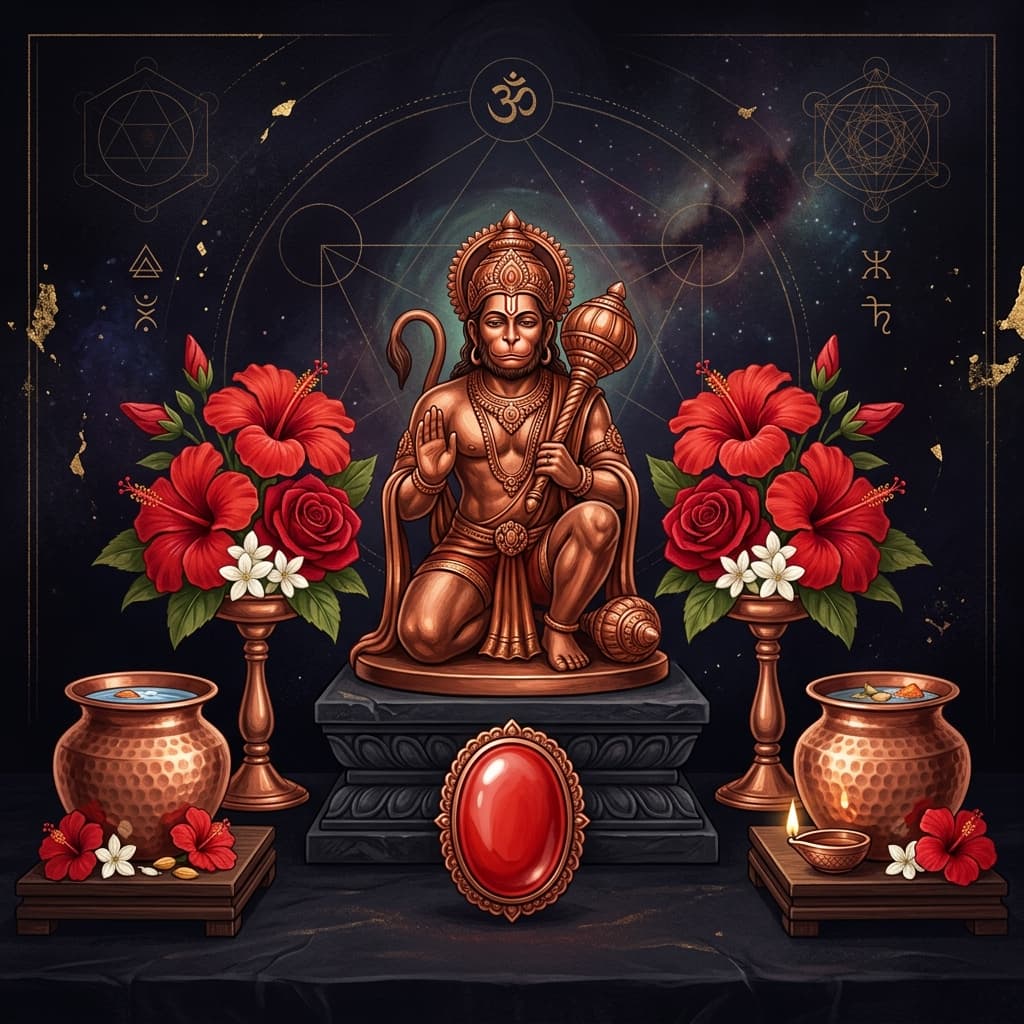
A dedicated puja (worship ceremony) performed to appease Mars. This typically involves Vedic chanting, offerings of red items (red cloth, red flowers, red lentils), and prayers to Lord Hanuman or Lord Kartikeya — both deities associated with Mars energy. The puja is ideally performed on a Tuesday, the day ruled by Mars.
Wearing Red Coral (Moonga)
Red Coral is the gemstone associated with Mars. Wearing a natural, untreated Red Coral in a gold or copper ring on the ring finger of the right hand is believed to strengthen Mars and channel its energy positively. However, gemstone remedies should only be undertaken after consulting a qualified astrologer — strengthening Mars is not appropriate for every chart, and an incorrectly prescribed gemstone can amplify problems rather than solve them.
Chanting Mangal mantras and Hanuman Chalisa
Regular chanting of Mars-related mantras is a gentle but effective remedy. The most commonly recommended mantras include:
- Mangal Beej Mantra: “Om Kraam Kreem Kraum Sah Bhaumaya Namah” — chanted 108 times daily, preferably on Tuesdays.
- Hanuman Chalisa: Lord Hanuman is considered the presiding deity for Mars. Reciting the Hanuman Chalisa daily, particularly on Tuesdays and Saturdays, is one of the most widely recommended remedies for Mangal Dosh.
- Gayatri Mantra: As a universal Vedic mantra, it brings overall spiritual balance and can help moderate the intensity of any planetary Dosh.
Fasting on Tuesdays
Observing a fast on Tuesdays (Mangalvar) is a simple, accessible remedy. The fast typically involves avoiding non-vegetarian food, salt, or grains, and consuming only fruits and milk. This practice is believed to reduce Mars’s aggressive influence and cultivate discipline — qualities that directly benefit marital harmony. Some traditions also recommend donating red lentils (masoor dal), red cloth, or jaggery to the needy on Tuesdays.
Visiting Mangal Nath Temple
The Mangalnath Temple in Ujjain, Madhya Pradesh, is considered the birth place of Mars according to Hindu tradition. Visiting this temple and performing puja there is believed to be particularly effective for Mangal Dosh remediation. For those who cannot visit, performing puja at any Hanuman temple on Tuesdays serves as an accessible alternative.
Should You Worry About Mangal Dosh?
Here is the balanced perspective that every individual and family should consider:
Mangal Dosh is extremely common. Statistically, Mars occupies one of the five Mangal Dosh houses for roughly 40% of all people. If this condition truly prevented marriage or guaranteed marital failure, nearly half the population would be affected. Clearly, that is not the case.
Context matters far more than any single factor. A birth chart contains dozens of interacting variables — the strength of Venus, the condition of the 7th house lord, the influence of Jupiter, the current Dasha period, and more. Isolating Mangal Dosh without considering the full picture is like diagnosing a medical condition based on a single symptom.
Awareness is valuable; fear is not. If your chart does show a strong, uncancelled Mangal Dosh, being aware of it is genuinely useful. It means you might benefit from cultivating more patience, being mindful of communication patterns, and perhaps performing some of the classical remedies as a spiritual practice. But letting fear of Mangal Dosh dictate life decisions — rejecting compatible partners, delaying marriage indefinitely, or spending large sums on dubious remedies — does more harm than the Dosh itself ever could.
Modern astrology takes a holistic view. Responsible astrologers today assess Mangal Dosh as one of many factors in marriage compatibility. They check for cancellation conditions, evaluate the Navamsha chart, consider the maturity of Mars based on age, and look at the overall Ashtakoot compatibility score before making any recommendations.
Get Your Personalised Marriage Analysis
Find out if Mangal Dosh is present in your chart, whether cancellation conditions apply, and get a complete 7th house analysis with Dasha timing for marriage.
Get Your Marriage Analysis