
Vimshottari Dasha System: Understanding Planetary Periods in Vedic Astrology
The Vimshottari Dasha system is the cornerstone of timing predictions in Vedic astrology. This 120-year planetary period cycle reveals when specific events will unfold in your life, making it one of the most powerful and widely used predictive tools in Jyotish Shastra.
Quick Answer: The Vimshottari Dasha system is a 120-year planetary period cycle in Vedic astrology that divides a person's life into sequential Mahadasha periods governed by each of the nine planets. Starting from the position of the Moon's Nakshatra at birth, it determines which planet's energy is active at any point in life, enabling astrologers to time when specific promises in the birth chart will manifest as actual events.
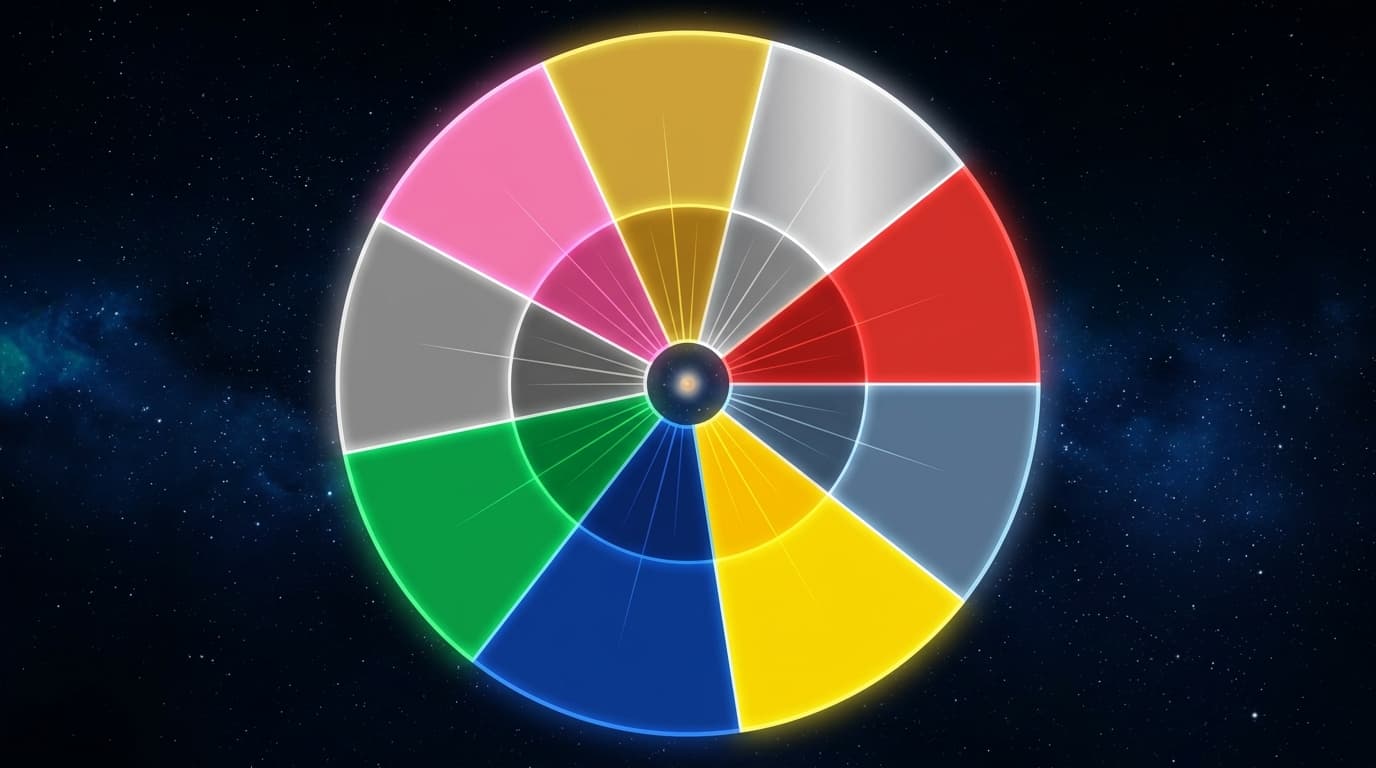
What is the Vimshottari Dasha System?
The word “Vimshottari” literally means “120” in Sanskrit, referring to the total span of the complete Dasha cycle. In Vedic astrology, the Vimshottari Dasha system is a method of timing that assigns specific planetary periods to every moment of your life. Unlike Western astrology, which relies heavily on transits alone, Vedic astrology uses this Dasha system as its primary predictive framework.
The system is rooted in the Nakshatras — the 27 lunar mansions that the Moon travels through during its cycle. The Nakshatra in which the Moon was placed at the exact moment of your birth determines the starting point of your personal Dasha sequence. From there, the nine planetary periods follow in a fixed order, cycling through a complete 120-year cycle.
Sage Parashara, the father of Vedic astrology, described multiple Dasha systems in the Brihat Parashara Hora Shastra. However, the Vimshottari Dasha is considered the universal default and is applicable to all charts. It is the system most commonly taught, practiced, and trusted by Vedic astrologers worldwide.
The genius of this system lies in its ability to answer the question that matters most to people: “When?” While a birth chart analysis reveals what kind of life you are destined for, the Dasha system tells you exactly when those promises will be activated. A person with strong wealth yogas in their chart, for example, will experience the peak of their financial fortune during specific Dasha periods that activate those combinations.
The 9 Planetary Periods (Mahadasha)
The Vimshottari system divides the 120-year cycle among nine celestial bodies — the seven classical planets plus the two lunar nodes, Rahu and Ketu. Each planet rules a specific number of years, and the sequence always follows the same fixed order. Here are all nine Mahadasha periods with their durations and primary themes:
Sun(Surya)
6 yearsAuthority, leadership, government, father, vitality, soul purpose
Moon(Chandra)
10 yearsEmotions, mother, mind, public life, nurturing, travel
Mars(Mangal)
7 yearsCourage, energy, property, siblings, ambition, conflict
Rahu(Rahu)
18 yearsAmbition, foreign lands, unconventional paths, obsession, material growth
Jupiter(Guru)
16 yearsWisdom, expansion, children, spirituality, wealth, higher learning
Saturn(Shani)
19 yearsDiscipline, hard work, delays, karma, structure, perseverance
Mercury(Budha)
17 yearsCommunication, intellect, business, trade, education, adaptability
Ketu(Ketu)
7 yearsSpirituality, detachment, past karma, mysticism, sudden changes, liberation
Venus(Shukra)
20 yearsLove, luxury, arts, marriage, vehicles, comfort, creativity
Total Cycle: 6 + 10 + 7 + 18 + 16 + 19 + 17 + 7 + 20 = 120 years
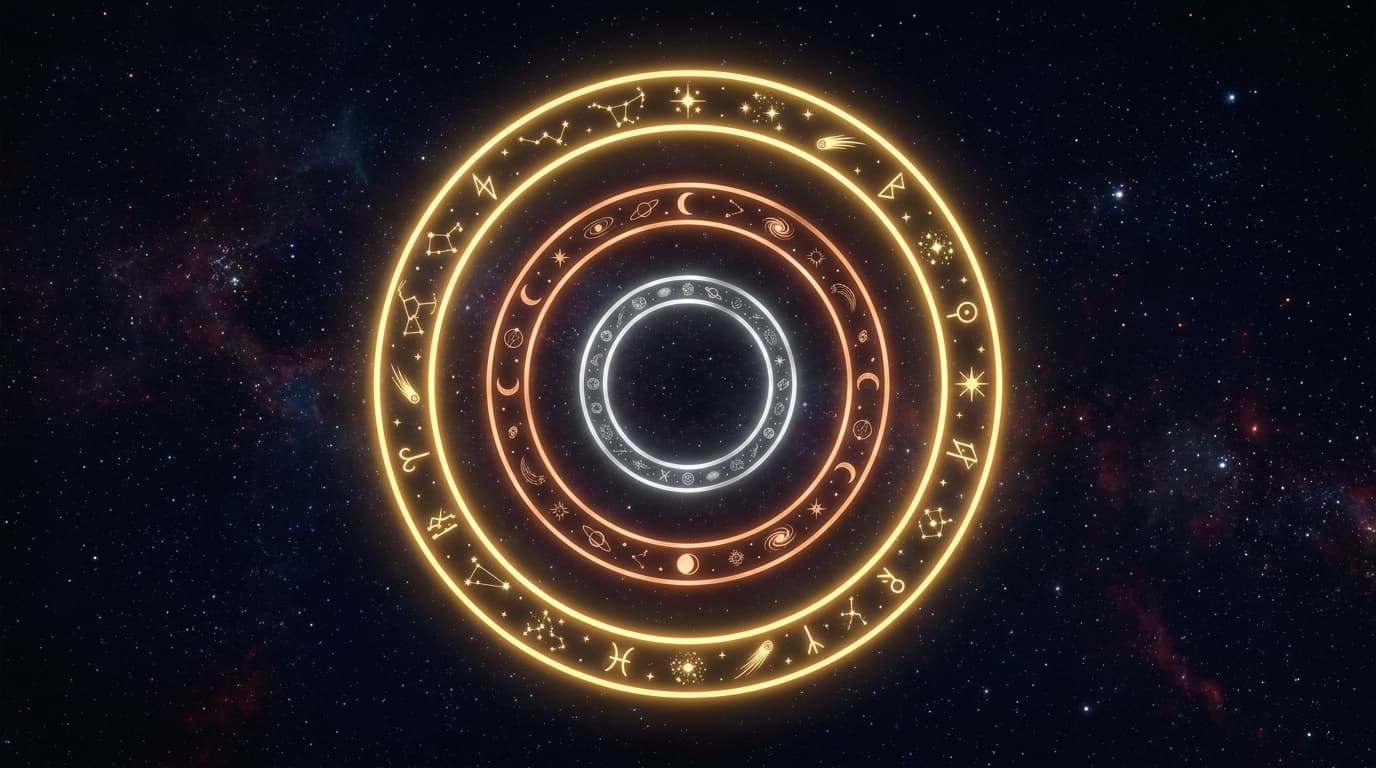
Levels of Dasha: From Macro to Micro
One of the most remarkable features of the Vimshottari system is its multi-layered structure. The Dasha cycle does not operate at just one level. Instead, it subdivides into increasingly finer periods, each adding precision to the prediction. Think of it like zooming into a map — the Mahadasha shows you the country, the Antardasha shows you the city, and the Pratyantardasha shows you the street.
Mahadasha (Major Period)
The Mahadasha is the broadest level of the Dasha system. It represents the overarching planetary influence that colors an entire chapter of your life. For instance, during your Saturn Mahadasha (lasting 19 years), Saturn's themes — discipline, hard work, structure, karma — will dominate your life experiences. The Mahadasha sets the stage and determines the general tone of that period.
Antardasha (Sub-Period)
Within each Mahadasha, there are nine Antardashas — one for each planet. The Antardasha acts as a modifier, blending its energy with the Mahadasha lord. For example, during Saturn Mahadasha and Jupiter Antardasha, you might experience growth and wisdom (Jupiter) achieved through sustained effort and patience (Saturn). The Antardasha periods last from a few months to a few years, depending on the planets involved.
Pratyantardasha (Sub-Sub-Period)
The Pratyantardasha divides each Antardasha further into nine sub-sub-periods. This is where predictions become remarkably specific. An astrologer analyzing your Pratyantardasha can often pinpoint events to within a few weeks. Beyond this level, there are even finer divisions — Sookshma Dasha and Prana Dasha — that can theoretically narrow timing down to days and hours.
How Each Level Refines Accuracy
The power of the multi-layered Dasha system is cumulative. At the Mahadasha level, you know the dominant planetary energy for a long stretch of time. The Antardasha tells you which specific themes within that broader energy will come to the foreground. And the Pratyantardasha pinpoints the trigger moments when events actually manifest. This is why Vedic astrologers can make time-specific predictions with remarkable accuracy — they are reading three or more layers simultaneously, each confirming and refining the others.

How Your Starting Dasha is Determined
Your personal Dasha sequence begins at the moment of your birth, but you do not necessarily start at the beginning of a Mahadasha. Instead, the Moon's exact position within its Nakshatra at birth determines where you enter the 120-year cycle.
Each of the 27 Nakshatras is ruled by one of the nine Dasha planets. For example, Ashwini Nakshatra is ruled by Ketu, Bharani by Venus, and Krittika by the Sun. The Nakshatra in which the Moon was placed at your birth determines which planet's Mahadasha you are born into. If your Moon was in Ashwini Nakshatra, you enter the cycle during Ketu Mahadasha.
But there is an additional nuance. Since the Moon may be at any point within the Nakshatra — at the beginning, middle, or end — the remaining balance of the first Mahadasha is proportionally calculated. If the Moon has traversed 60% of Ashwini Nakshatra at birth, then 60% of Ketu's 7-year period has already elapsed, and you begin life with only the remaining 40% (about 2 years and 10 months) of Ketu Mahadasha. After that balance period ends, the sequence continues in fixed order: Venus, Sun, Moon, Mars, Rahu, Jupiter, Saturn, Mercury, and then back to Ketu.
This calculation is what makes the Dasha system uniquely personal. Two people born minutes apart but with the Moon in different Nakshatras will have entirely different Dasha sequences, leading to very different life timelines. This is also why accurate birth time is critically important in Vedic astrology — even a few minutes can shift the Moon into a different Nakshatra and alter your entire Dasha framework.
Effects of Each Mahadasha
Each Mahadasha brings its ruling planet's energy to the forefront of your life. However, the actual effects depend heavily on how that planet is placed in your individual birth chart. A well-placed planet will deliver its positive significations, while a poorly placed one may bring challenges related to its themes. Here is a brief overview of each Mahadasha:
Sun Mahadasha (6 Years)
The Sun's period brings focus to your identity, authority, and life purpose. Expect themes around government, leadership roles, father-related matters, and recognition. A strong Sun Mahadasha can elevate your status and bring public visibility, while a weak one may create ego conflicts, health issues related to the heart or bones, and strained relationships with authority figures.
Moon Mahadasha (10 Years)
The Moon governs the mind, emotions, and public connection. During this period, emotional well-being, relationships with your mother, domestic life, and mental peace take center stage. A well-placed Moon Mahadasha can bring popularity, emotional fulfillment, and success in public-facing roles. Challenges may include emotional instability, anxiety, or upheaval in domestic life.
Mars Mahadasha (7 Years)
Mars infuses your life with energy, courage, and drive. This is a period of action — property purchases, land dealings, competitive endeavors, and physical vitality. A strong Mars Mahadasha can bring property gains, victory in competition, and leadership through action. Negatively, it may bring aggression, accidents, legal disputes, or conflicts with siblings.
Rahu Mahadasha (18 Years)
Rahu is the planet of ambition, illusion, and unconventional paths. This lengthy 18-year period is often transformative and unpredictable. Rahu Mahadasha can propel you into foreign lands, technology-driven careers, or unconventional professions. It brings intense material desires and worldly success when well-placed. Poorly placed Rahu can bring confusion, deception, addictions, and a persistent feeling of dissatisfaction despite outward success.
Jupiter Mahadasha (16 Years)
Jupiter is the great benefic, and its Mahadasha is often considered one of the most favorable. It brings expansion, wisdom, spirituality, and prosperity. This is typically a period of higher education, children, wealth accumulation, and spiritual growth. Those with strong Dhana Yogas in their chart may see their wealth potential fully activated during Jupiter Mahadasha. Even when Jupiter is challenged, its period rarely brings severe hardship — it may simply limit growth rather than cause destruction.
Saturn Mahadasha (19 Years)
The longest of the traditional planet periods, Saturn Mahadasha demands patience, discipline, and perseverance. Saturn is the planet of karma — during its 19-year reign, you reap what you have sown. For those who have built solid foundations through hard work and ethical living, Saturn Mahadasha can bring lasting success, authority, and recognition. For others, it may bring delays, obstacles, chronic health issues, and a feeling of being tested at every turn. Saturn does not punish — it teaches through experience.
Mercury Mahadasha (17 Years)
Mercury governs intellect, communication, commerce, and adaptability. Its Mahadasha favors education, business ventures, writing, analytical work, and networking. A strong Mercury period can bring sharp intellect, business success, and excellent communication skills. Challenges may include nervous disorders, skin issues, indecisiveness, or scattered energy that prevents deep focus.
Ketu Mahadasha (7 Years)
Ketu is the planet of spirituality, detachment, and past-life karma. Its Mahadasha often brings sudden and unexpected changes that push you toward spiritual growth. You may develop interest in meditation, mysticism, or alternative healing. Ketu can bring sudden gains or losses, and its period often involves letting go of attachments that no longer serve your soul's evolution. It is a period of inner transformation more than material accumulation.
Venus Mahadasha (20 Years)
Venus rules the longest Mahadasha at 20 years. It governs love, beauty, luxury, marriage, creativity, and material comforts. A well-placed Venus Mahadasha is often the most enjoyable period of life — marriage, romantic fulfillment, artistic success, acquisition of vehicles and property, and a general sense of abundance. Even challenging Venus placements tend to bring some level of comfort, though they may also involve relationship turbulence, overindulgence, or excessive attachment to material pleasures.
How to Use Dasha for Life Planning
Understanding your current and upcoming Dasha periods is one of the most practical applications of Vedic astrology. Rather than leaving major life decisions to guesswork, you can align your actions with the planetary energies that are supporting you at any given time.
Career Moves and Business Decisions
Planning a career change or starting a business? The Dasha of your 10th house lord or a planet connected to your career houses can indicate the best windows for professional growth. Jupiter or Mercury Antardashas within a supportive Mahadasha are often ideal for launching new ventures or seeking promotions.
Marriage and Relationships
Venus Dasha or the Dasha of your 7th house lord are the most common triggers for marriage. By analyzing your Dasha timeline, you can identify the most probable windows for meeting your partner or taking a relationship to the next level. This is why Vedic astrology is so widely consulted for marriage timing in India.
Investments and Wealth Building
The Dasha periods of your 2nd, 5th, 9th, and 11th house lords are the windows of maximum financial potential. If you have Dhana Yoga combinations in your chart, the Dasha that activates those yogas is the time to be aggressive with investments and wealth-building strategies.
Education and Skill Development
Jupiter and Mercury Dashas naturally support learning and skill acquisition. If you are debating when to pursue higher education, professional certifications, or a complete skill pivot, aligning these decisions with favorable Dasha periods dramatically increases your chances of success and retention.
Health and Well-Being
Certain Dasha periods may indicate vulnerability to specific health issues based on the planetary significations and their placement in your chart. Knowing these periods in advance allows you to take preventive measures, adopt healthier routines, and schedule medical check-ups proactively rather than reactively.
Getting Your Personalized Dasha Analysis
The Vimshottari Dasha system is immensely powerful, but its true value is unlocked only when applied to your specific birth chart. Generic descriptions of Mahadasha effects can only tell you so much. The actual results depend on the planet's house placement, sign, aspects, conjunctions, and the houses it rules in your unique chart. A personalized analysis considers all these factors to give you actionable, time-specific guidance.
2026 Yearly Forecast
Get month-by-month predictions based on your running Dasha periods, transits, and birth chart analysis for 2026.
Get Your 2026 Forecast →5-Year Forecast Report
Plan the next five years with a comprehensive Dasha-based analysis covering career, wealth, relationships, and health.
Get Your 5-Year Forecast →Conclusion
The Vimshottari Dasha system transforms Vedic astrology from a static description of personality and potential into a dynamic, time-sensitive roadmap for life. By understanding which planet governs each chapter of your life and how its sub-periods refine the prediction, you gain a profound tool for navigating opportunities, preparing for challenges, and making aligned decisions.
Whether you are entering a powerful Jupiter Mahadasha that promises expansion, navigating the transformative currents of Rahu, or building through the disciplined grind of Saturn, knowing your Dasha sequence empowers you to work with the cosmic rhythm rather than against it. Explore your personal Dasha timeline through a 2026 forecast report or a five-year forecast to see exactly what the planets have in store for you.
Frequently Asked Questions About Vimshottari Dasha
What is Vimshottari Dasha in astrology?
Vimshottari Dasha is the most widely used planetary period system in Vedic astrology. It is a 120-year cycle divided among 9 planets (Sun, Moon, Mars, Rahu, Jupiter, Saturn, Mercury, Ketu, Venus), where each planet rules a specific number of years called Mahadasha. Your starting Dasha is determined by the Moon's Nakshatra position at birth. This system enables precise timing predictions for career, marriage, wealth, and health events.
What is the meaning of Vimshottari Dasha?
The word “Vimshottari” comes from Sanskrit — “Vimsho” means twenty and “Uttari” means above/beyond, referring to the 120-year (20 × 6) total cycle. The word “Dasha” means “state” or “condition”, referring to the planetary period you are currently living through. So Vimshottari Dasha literally means “the 120-year planetary state system.”
How to calculate Vimshottari Dasha?
To calculate your Vimshottari Dasha: (1) Find the Moon's exact position at your birth time, (2) Identify which Nakshatra the Moon occupies, (3) Each Nakshatra is ruled by a specific planet — that becomes your starting Mahadasha, (4) Calculate how much of the starting Mahadasha remains based on the Moon's degree within the Nakshatra, (5) After the first Mahadasha ends, the remaining planets follow in a fixed sequence: Sun, Moon, Mars, Rahu, Jupiter, Saturn, Mercury, Ketu, Venus.
Which Mahadasha is most powerful?
Rahu Mahadasha (18 years) and Saturn Mahadasha (19 years) are considered the most powerful and transformative periods. However, Jupiter Mahadasha (16 years) is generally the most beneficial, bringing wisdom, expansion, wealth, marriage, and spiritual growth. The actual results depend on each planet's strength and placement in your birth chart.
What is the difference between Mahadasha, Antardasha, and Pratyantardasha?
Mahadasha is the main planetary period lasting several years (e.g., Venus = 20 years). Antardasha (Bhukti) is a sub-period within the Mahadasha. Pratyantardasha is a further subdivision within each Antardasha. Think of it as: Mahadasha sets the broad theme (years), Antardasha defines specific chapters (months), and Pratyantardasha pinpoints exact timing (weeks).
How does Vimshottari Dasha affect marriage timing?
Marriage timing depends on the Mahadasha and Antardasha of planets connected to the 7th house. Venus Mahadasha or Antardasha is the most common trigger since Venus is the natural significator of marriage. Jupiter's period also brings marriage opportunities. The Dasha of the 7th house lord can activate marriage. Saturn or Ketu periods may delay marriage unless they specifically rule the 7th house in your chart.
